
The Real Value of Full-Service Wedding Planning

When couples first begin planning a wedding, they often expect the process to feel busy.
They know there will be decisions to make, details to confirm, and logistics to organize. What many do not anticipate is how quickly planning can begin to feel mentally and emotionally consuming, even when everything appears to be “on track” from the outside.
The true weight of wedding planning is rarely just the checklist. It is the invisible responsibility attached to every moving piece.
It is becoming the default point person for vendors, family communication, timing, etiquette, and countless decisions that carry more emotional nuance than they initially seem to. It is trying to hold the practical and the personal at the same time, while also hoping to remain present for an experience that matters deeply.
That is where full-service planning should step in. At its best, full-service planning is not simply about assistance. It is about protection.
The Weight Full-Service Wedding Planning Helps Carry
Wedding planning asks couples to manage far more than aesthetics and logistics.
Behind the scenes, there is often a constant stream of decisions, communication, shifting priorities, and emotional considerations that accumulate quietly over time. Even highly capable and organized couples can find themselves feeling depleted, not because they are doing anything wrong, but because the process asks them to carry an unusual amount of responsibility all at once.
A wedding is both a production and a personal milestone.
It is layered with logistics, yes, but also with meaning, family dynamics, social expectations, financial pressure, and the desire to create something that feels deeply reflective of the people at the center of it.
That combination can become heavy very quickly.
For many couples, the challenge is not simply that there is “a lot to do.”
It is that they are carrying too much of what should never have been theirs to hold alone.
What Full-Service Planning Should Actually Create
The strongest full-service wedding planning support does more than help couples stay organized.
It creates structure around the entire experience.
That means guiding decisions with context instead of asking couples to sort through endless options on their own. It means leading communication so they are not fielding every question and managing every moving part themselves. It means thinking far enough ahead to prevent unnecessary friction before it ever reaches them.
A planner’s role is not simply to react when something becomes urgent.
It is to create a process so thoughtfully and proactively that much of what could have felt stressful never has the opportunity to escalate in the first place.
That kind of support changes the experience of planning in a meaningful way.
Instead of constantly feeling like they are managing an event in progress, couples are able to move through the process with more clarity, more steadiness, and far less mental clutter.
That is often where the real relief begins.
Why Full-Service Wedding Planning Goes Beyond Logistics
One of the most misunderstood aspects of wedding planning is that many logistical decisions are not truly logistical at all.
A seating chart may involve family history. A timeline may carry emotional implications. A guest list, ceremony structure, or weekend itinerary may require far more relational navigation than most people expect.
What appears simple on paper often carries emotional weight in practice.
Without the right support, couples can find themselves not only making decisions, but also absorbing the emotional pressure surrounding them. That kind of strain can be difficult to articulate, especially when so much of it remains invisible to everyone else.
An exceptional planner helps create space between the couple and that pressure.
Not by removing meaning from the process, but by protecting their capacity to move through it with more calm, clarity, and perspective.
That is one of the most valuable parts of the work, and one of the least visible.
The Goal Is To Be Thriving, Not Surviving
By the time the wedding day arrives, couples should not still be carrying the event.
They should not be fielding vendor questions, mentally tracking the timeline, managing transportation flow, navigating family logistics, or wondering whether each transition is unfolding the way it should.
And yet, that is often what happens when the invisible burden of planning has never been fully lifted.
A wedding day moves quickly. It is emotional, layered, and fleeting. It deserves to be experienced from within, not managed from the edges.
The true work of full-service wedding planning is to create the conditions for presence.
To protect the atmosphere, the flow, the behind-the-scenes mechanics, and the emotional tone of the day so that the couple is free to be where they belong: inside the moment itself.
What Couples Are Really Investing In With Full-Service Wedding Planning
When couples invest in full-service wedding planning, they are not simply investing in organization.
They are investing in discernment. In steadiness. In leadership that sees the full picture and holds what needs holding before it becomes theirs to manage.
They are investing in the protection of their time, their energy, their relationships, and their ability to remain present throughout the experience, and in many ways, that is the most meaningful luxury of all.
A beautifully planned wedding is not only one that looks refined or runs smoothly. It is one in which the couple feels supported enough, calm enough, and fully cared for enough to actually live it while it is happening.
That is what full-service wedding planning should make possible.
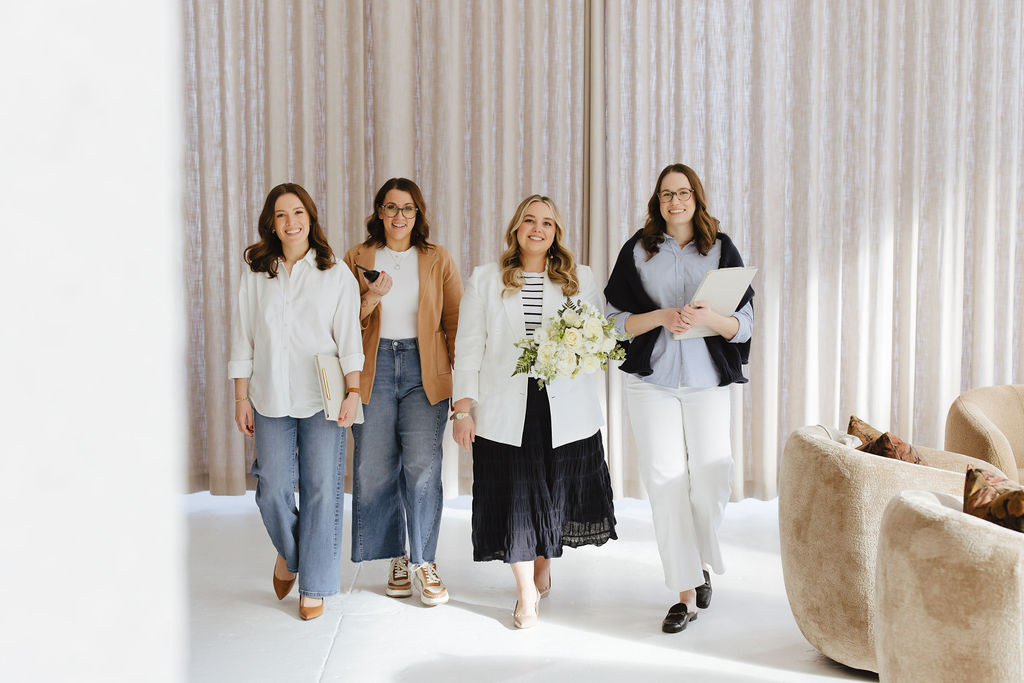
Planning With Us Feels Different
If you’re beginning to realize that wedding planning involves far more than timelines, checklists, and vendor contracts, you’re not alone.
The couples we work with often come to us because they want more than help managing logistics. They want a trusted partner who can provide guidance, create clarity, and protect their time, energy, and peace of mind throughout the process.
If that sounds like the kind of support you’re looking for, we’d love to learn more about your vision and explore how we can help make your wedding feel as seamless as it is meaningful.
Schedule a complimentary consultation to begin the conversation.

